Social CRM for Scalable Proactive Engagement
How Social CRM Helps Scale Proactive Engagement
Your customer service team is overwhelmed with messages from Instagram, Facebook, LINE, and WhatsApp. Managing hundreds of daily conversations across multiple platforms leads to slow response times and frustrated customers. Hiring more staff isn’t the answer - it’s expensive and doesn’t solve the core issue: scattered interactions without a unified system.
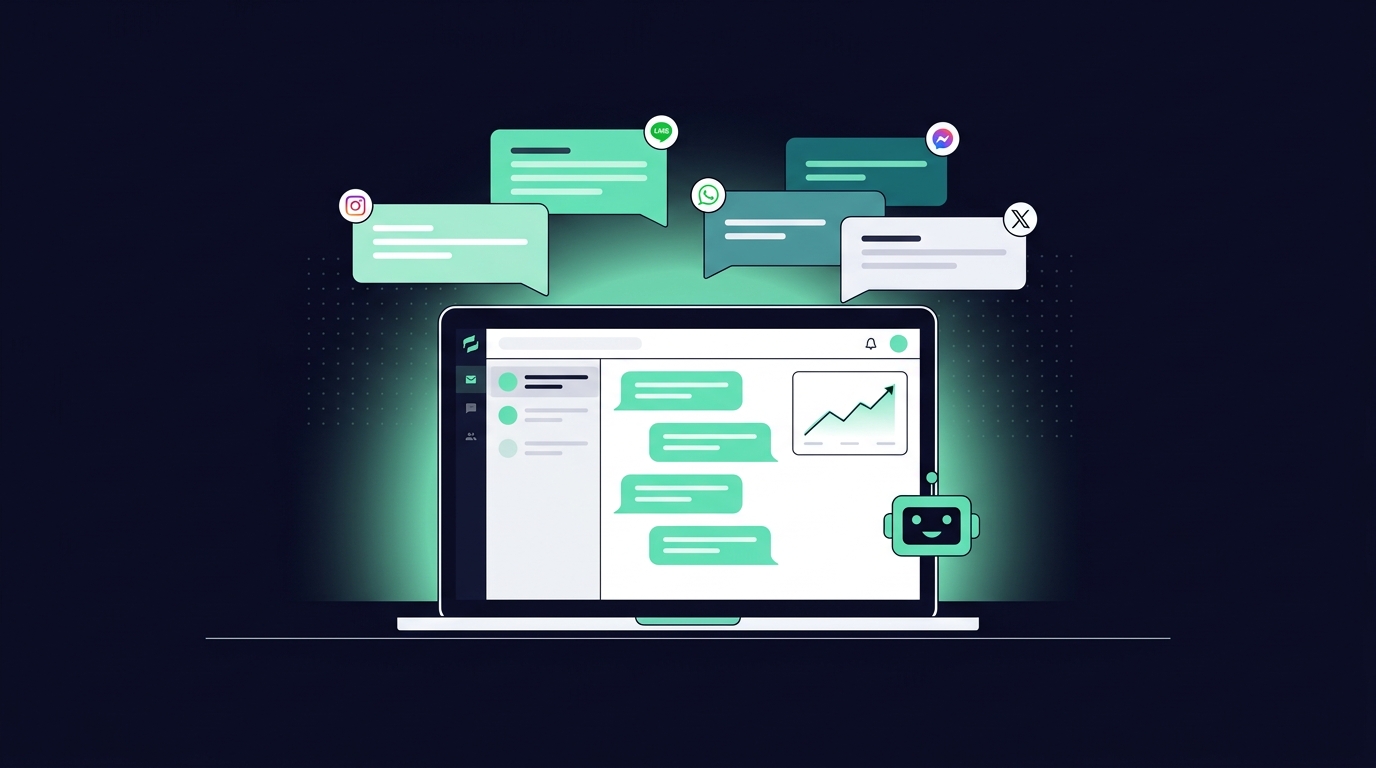
The solution? Social CRM. It centralizes all conversations into one inbox, uses AI to automate routine tasks, and equips your team with the context they need to respond faster. This means you can handle more inquiries without increasing headcount.
Key Takeaways:
- Social CRM consolidates messages from multiple platforms into one place.
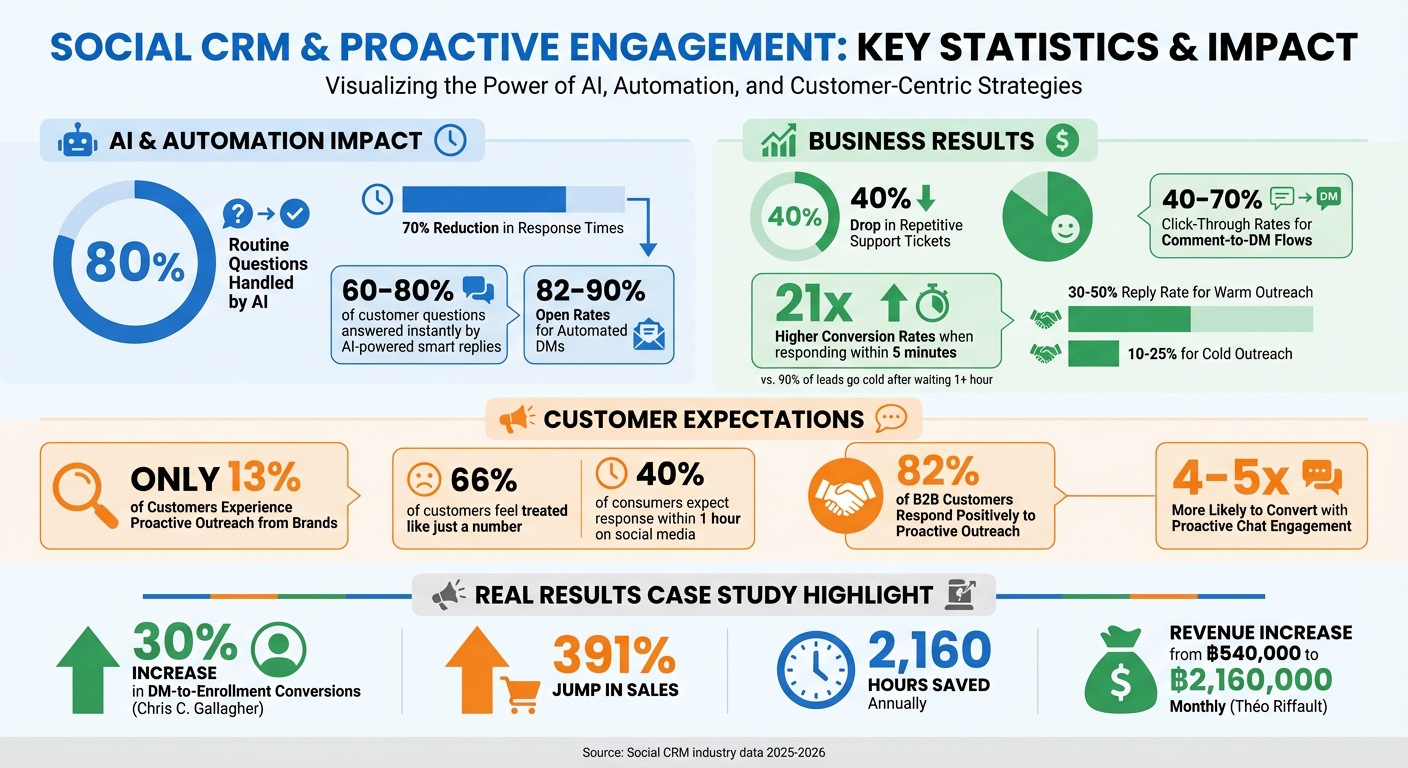
- AI handles up to 80% of routine questions, cutting response times by 70%.
- Proactive engagement reduces customer frustration by addressing issues before they arise.
- Businesses using Social CRM report a 40% drop in repetitive support tickets and improved customer satisfaction.
What Is Proactive Engagement and Why It Matters
Using a unified Social CRM platform makes it easier to take a proactive approach by automating and streamlining customer interactions.
What Proactive Engagement Means
Proactive engagement is all about anticipating customer needs and addressing potential issues before they even occur. Imagine this: instead of waiting for a customer to reach out about a delayed order or a confusing feature, you step in first with the information they need. It’s the difference between preventing frustration and having to fix it.
Most businesses still operate reactively, meaning they only respond after a customer contacts them with a problem . Proactive engagement flips this script by leveraging behavioural data and usage patterns to predict issues and act early. For instance, if your system detects a payment failure, you can notify the customer right away, providing a direct link to update their payment method - often before they even realise there’s an issue.
This approach makes a huge difference. Reactive customer service starts with the customer already frustrated, while proactive service begins with a neutral or even positive interaction. This shift can completely change how customers view your brand. Despite its clear advantages, only 13% of customers report experiencing proactive outreach from a brand.
By anticipating needs, proactive engagement not only prevents problems but also boosts customer satisfaction in measurable ways.
Business Benefits of Proactive Engagement
The benefits of proactive engagement are hard to ignore. A whopping 85% of customers who experienced proactive service found it valuable. These interactions consistently perform better on metrics like Net Promoter Score (NPS), Customer Satisfaction (CSAT), and Customer Effort Score (CES), compared to reactive service.
For businesses managing a high volume of customer interactions, the operational and financial benefits are immediate. By addressing common problems early - like shipping delays, feature misunderstandings, or payment issues - you can significantly reduce repetitive support tickets. Companies using proactive strategies have reported up to a 40% drop in reactive support requests, allowing support teams to focus on more complex issues.
The financial upside is just as compelling. Proactive outreach encourages deeper customer engagement, with 82% of B2B customers responding positively to such efforts. This often leads to upselling opportunities. Additionally, website visitors who engage through proactive chats are 4–5 times more likely to convert than those who browse passively. Social CRM tools make these timely, personalised interactions possible, ensuring that proactive touchpoints feel helpful rather than intrusive.
Proactive engagement also builds trust. In a world where 66% of customers feel like they’re treated as just another number, reaching out first shows that you value their time and understand their unique needs. This approach transforms simple transactions into meaningful relationships, turning everyday customers into loyal advocates for your brand.
How Social CRM Scales Proactive Engagement
The real challenge of proactive engagement isn’t just wanting to do it - it’s figuring out how to scale it without hiring a massive team. Social CRM tools make this possible. By combining automation, AI, and streamlined workflows, these platforms allow small teams to manage thousands of interactions at once. Let’s break down how Social CRM features make proactive engagement scalable.
Bringing All Conversations Into One Place
Managing high volumes of LINE customer messages can quickly turn into chaos. Switching between LINE channels or inboxes wastes time and often leads to lost context. ReplyAll Chat solves this by pulling all conversations into a single, unified inbox.
This unified approach provides full-context insights. By merging past interactions from different platforms into one customer profile, your team gains a complete picture of each customer’s journey. For instance, if a customer messaged you on LINE about a product last week and now comments on your Instagram post, you’ll instantly know their history. This level of context transforms generic responses into targeted, meaningful interactions.
And the speed advantage? It’s huge. Responding to leads within 5 minutes increases conversion rates by 21 times compared to waiting an hour or more. Beyond that, 90% of leads go cold . With a tool like ReplyAll Chat, your team can maintain this crucial response time across all platforms without missing a beat.
Setting Up Automated Engagement Triggers
Automation turns proactive engagement into a scalable system. By setting up automated rules, you can identify key user actions - like comments with keywords such as “PRICE” or DMs asking about availability - and trigger instant, concise responses (under 300 characters) that provide value without overwhelming the user .
The numbers back this up. Automated DMs in optimized workflows boast open rates of 82% to 90%, while comment-to-DM flows see click-through rates between 40% and 70%. A great example? In 2026, fitness coach Théo Riffault, with 46,300 followers, used AI-driven DM automation to streamline lead qualification and bookings. His monthly revenue jumped from ฿540,000 to ฿2,160,000, and his call volume tripled from 40 to 120.
“Speed wins: When someone comments ‘price?’ or ’link?’, the most persuasive response is the one that arrives now, inside DMs.” - ReplyRush
Using AI-Powered Smart Reply Suggestions
Once automation is in place, AI-driven reply suggestions make handling more complex interactions even easier. These smart replies can address 60–80% of customer questions instantly , freeing up your team to focus on more nuanced, high-value tasks.
Platforms like ReplyAll Chat take this a step further. Their AI can be trained on your business’s specific resources - like FAQs, shipping policies, and product catalogs - ensuring responses are accurate and aligned with your brand’s tone. Advanced integrations, such as Shopify, allow the AI to provide real-time updates on stock levels or order statuses, improving both speed and precision.
The efficiency gains are undeniable. In 2026, a career coach with 45,000 Instagram followers used automation to manage high-volume lead qualification. By leveraging comment triggers and Story mention automation, she increased her monthly discovery calls from 45 to 108 - a 2.4x boost - while slashing her automation costs by 96%.
A hybrid workflow is essential here. Train your AI to flag high-risk keywords like “broken,” “refund,” or “frustrated” so that these conversations are escalated to a human agent immediately. Use what’s called the “2-Message Pattern”: send an instant automated acknowledgment to buy time, followed by a thoughtful, data-driven response.
“The trick: Automate the boring parts, keep humans for edge cases.” - Spur
Measuring and Improving Proactive Engagement Performance
Scaling proactive engagement is just the beginning. The real challenge lies in determining if your efforts are paying off. Without tracking the right metrics, you might waste time on strategies that don’t deliver results.
Key Metrics to Track
Start by measuring speed and efficiency. Metrics like Average First Response Time and Average Resolution Time are essential benchmarks. Why? Because 40% of consumers expect a response within an hour on social media, and brands that reply within 15 minutes often see the highest satisfaction rates.
But it’s not just about speed. Engagement quality matters too. Instead of focusing on vanity metrics like follower counts, look at Conversation Rate (comments per post) and Applause Rate (likes and saves) to gauge meaningful interactions. For proactive outreach, track metrics such as:
- Total Outreach Sent
- Follow-Up Success Rate: The ratio of re-engaged contacts to follow-up attempts
- Average Touchpoints Before Reply
Here’s a telling statistic: 80% of successful deals require at least five follow-ups, yet 44% of sales reps give up after just one attempt. Warm outreach to already-engaged users tends to yield a 30–50% reply rate, while cold outreach averages around 10–25%.
Efficiency and conversion are also critical. Monitor “One & Done” rates to see how many tickets are resolved with a single response - this reflects the effectiveness of your proactive scripts. Use SLA Compliance to measure how well you’re meeting your Service Level Agreements. Finally, connect your social engagement to revenue by tracking metrics like Click-Through Rate (CTR) on proactive links and Close Rate by Source to identify which platforms are driving the most conversions.
Once these metrics are in place, dashboards can help you dive deeper into the data.
Using Dashboards to Analyze Performance
Dashboards make it easier to turn raw data into actionable insights. Tools like ReplyAll Chat bring together LINE performance metrics into one view. This allows you to quickly identify which channels are performing best and where adjustments are needed. Social CRMs also let you customize dashboards to focus on specific KPIs, such as User Performance or Ticket Language.
Dashboards are particularly helpful for spotting bottlenecks. For instance, if your Average First Response Time is increasing, it could point to staffing issues or inefficient workflows. Advanced dashboards can even break down resolution rates by AI versus human agents, helping you refine automated responses where necessary. Metrics like Within SLA and Overdue SLA ensure you’re meeting customer expectations.
To maintain speed and efficiency, consider adopting the 10-second triage rule: every new message should be categorized (e.g., sales or support), labeled (e.g., status), and assigned a next action within 10 seconds. Additionally, using UTM parameters on links shared during proactive engagement can help map the customer journey from the initial message to the final purchase.
Conclusion
Scaling proactive engagement doesn’t require expanding your team - it’s about using smart technology effectively. ReplyAll Chat brings together LINE conversations into a single, streamlined inbox. This eliminates the hassle of juggling multiple apps and ensures no high-intent lead slips through the cracks.
Centralizing your social interactions lays the groundwork for tangible results. For instance, responding within 5 minutes can boost conversion rates by 21×. In 2025, real estate educator Chris C. Gallagher demonstrated the power of automation by managing over 200 Instagram DM inquiries daily. The outcome? A 30% increase in DM-to-enrollment conversions, a 391% jump in sales, and 2,160 hours saved annually by responding to leads within 60 seconds.
“Our inbox used to be a black hole - now it’s our top sales channel. The automation paid for itself in just two months!” - Chris C. Gallagher, Wholesale Real Estate Educator
This success comes from combining speed with intelligent automation. AI-driven tools can handle 60–80% of routine queries instantly, allowing your team to focus on meaningful, high-value conversations. Automated follow-ups ensure you maintain momentum without extra effort, while performance dashboards provide clear insights into what’s working and where adjustments are needed. It’s a winning formula for modern engagement.
FAQs
How do I start proactive engagement without annoying customers?
To connect with customers effectively without overwhelming them, prioritize personalized and meaningful communication. Tailor your messages by including their name, referencing their interests, or offering exclusive deals that resonate with their preferences. Always respect their choices, such as opt-outs, and adhere to platform guidelines to build and maintain trust.
Tools like ReplyAll Chat can be a game-changer. They help you automate responses while keeping them personal, ensuring your interactions remain helpful, respectful, and efficient across various platforms.
What should AI handle vs a human agent?
In social CRM, AI can take over repetitive tasks like answering FAQs, automating initial direct message (DM) responses, and qualifying leads through pre-set workflows. This not only speeds up response times but also frees up human agents to concentrate on more complex and nuanced interactions.
Human agents, however, play a crucial role when it comes to handling escalations, managing complaints, or addressing sensitive topics that demand empathy and sound judgment. They bring a personal touch, building trust and delivering tailored experiences that AI simply can’t replicate.
Which metrics prove Social CRM is working?
Metrics such as engagement rates (likes, comments, shares), reply rates, success in follow-ups, and conversion rates provide a clear picture of how effectively Social CRM is performing. These numbers highlight how well your team handles interactions and contributes to achieving business goals.