DM Response Time Benchmarks 2026: What Fast Really Means
DM Response Time Benchmarks 2026: What “Fast” Actually Means Now
Every brand says they reply fast. Almost none of them do.
When we looked at how creator and DTC teams actually handle their inboxes, the gap between what customers expect and what brands deliver is enormous — and it’s getting wider every year. This guide breaks down realistic DM response time benchmarks for 2026 across the four platforms that matter most (Instagram, WhatsApp, LINE, Messenger), why the old “reply within 24 hours” rule is now a conversion killer, and what it takes to consistently hit a sub-5-minute median without doubling headcount.
Why DM response time is a 2026 problem, not a 2020 one
Five years ago, “we’ll get back to you within one business day” was acceptable. In 2026, the average consumer treats a DM like a text message to a friend. If you don’t respond in the same session, attention is gone — usually to a competitor one tap away in the same app.
Three forces made this worse in the last 18 months:
- Always-on commerce. LINE, Instagram Shops, WhatsApp Business catalogs and Messenger checkout mean DMs are now the checkout line, not the customer service queue.
- Creator-led commerce. A single influencer drop can push 500–5,000 DMs in the first hour. A human team can’t absorb that spike.
- AI-native expectations. Customers have been trained by ChatGPT, Gemini and in-app AI assistants to expect near-instant, contextual replies. A 4-hour delay now feels negligent, not normal.
The practical consequence: response time has shifted from a support metric to a revenue metric. Your first-reply SLA is now a conversion lever.
What “fast” looks like in 2026 — platform benchmarks
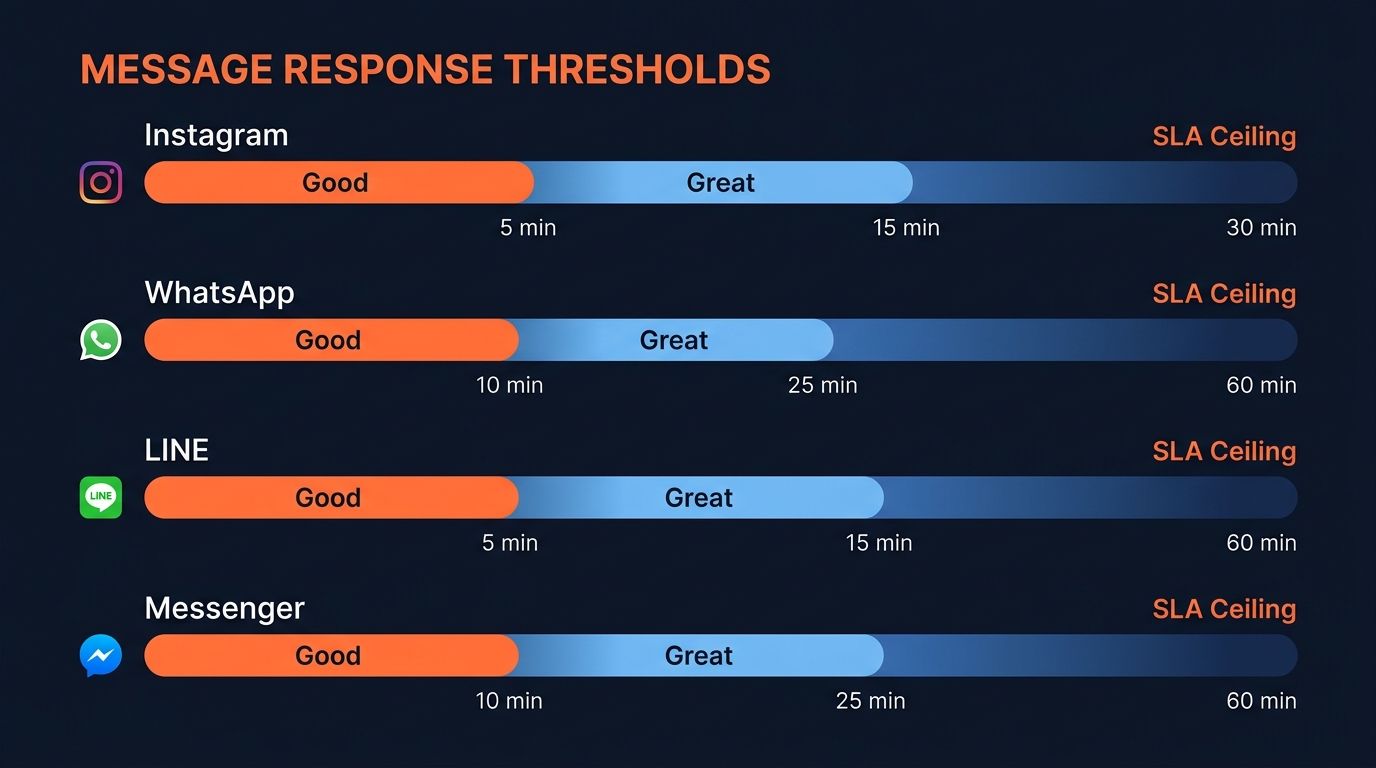
Response time expectations vary sharply by channel because each app sets a different social contract. Here are realistic 2026 benchmarks based on what high-performing teams we work with are hitting:
| Channel | “Good” median reply | “Great” median reply | Expected SLA ceiling |
|---|---|---|---|
| Instagram DM | under 15 min | under 3 min | 1 hour |
| WhatsApp Business | under 10 min | under 2 min | 30 min |
| LINE (Thailand, SEA) | under 5 min | under 1 min | 15 min |
| Messenger | under 30 min | under 5 min | 2 hours |
LINE has the strictest expectations because it’s treated as the default messaging app in several markets. A 20-minute LINE reply feels as slow as a 24-hour email reply does in the rest of the world.
The real cost of a slow first reply
Slow replies don’t just cost you the immediate sale. They compound in three ways:
- Lead decay. A warm DM cools by roughly half after 30 minutes of silence. The intent window for most impulse purchases is measured in minutes, not hours.
- Algorithmic downranking. Instagram and Messenger both factor response speed into whether your business tier gets promoted features and badges. Slow responders get shown less.
- Reputation drift. Public replies to comments that never get answered create a visible trail. Competitors screenshot them.
The most useful metric here isn’t “average response time” — it’s median time to first meaningful reply. Averages are skewed by outliers (the one DM answered at 3 am after five days). Median is what your typical customer actually experiences.
Why human-only teams can’t hit these numbers
There’s a simple math problem behind every slow inbox: the number of qualified humans you can afford to hire is almost always smaller than the volume of DMs your marketing generates. A team of three can handle roughly 300–500 thoughtful DMs per day before reply quality collapses. A single viral post or paid campaign pushes that ceiling in a single afternoon.
The industry’s default solution — hire more client managers, train them for 2–3 weeks, hope they stay six months — fails on both ends. Training is slow, and attrition is high because DM moderation burns people out.
This is why response time benchmarks have become an infrastructure question, not a staffing one.
How to hit sub-5-minute median reply time without more hires
Teams who hit the “great” column above all do the same five things:
- One inbox, all channels. Tab-switching between LINE, IG, WhatsApp and Messenger is where the minutes disappear. A unified social inbox eliminates the context switch.
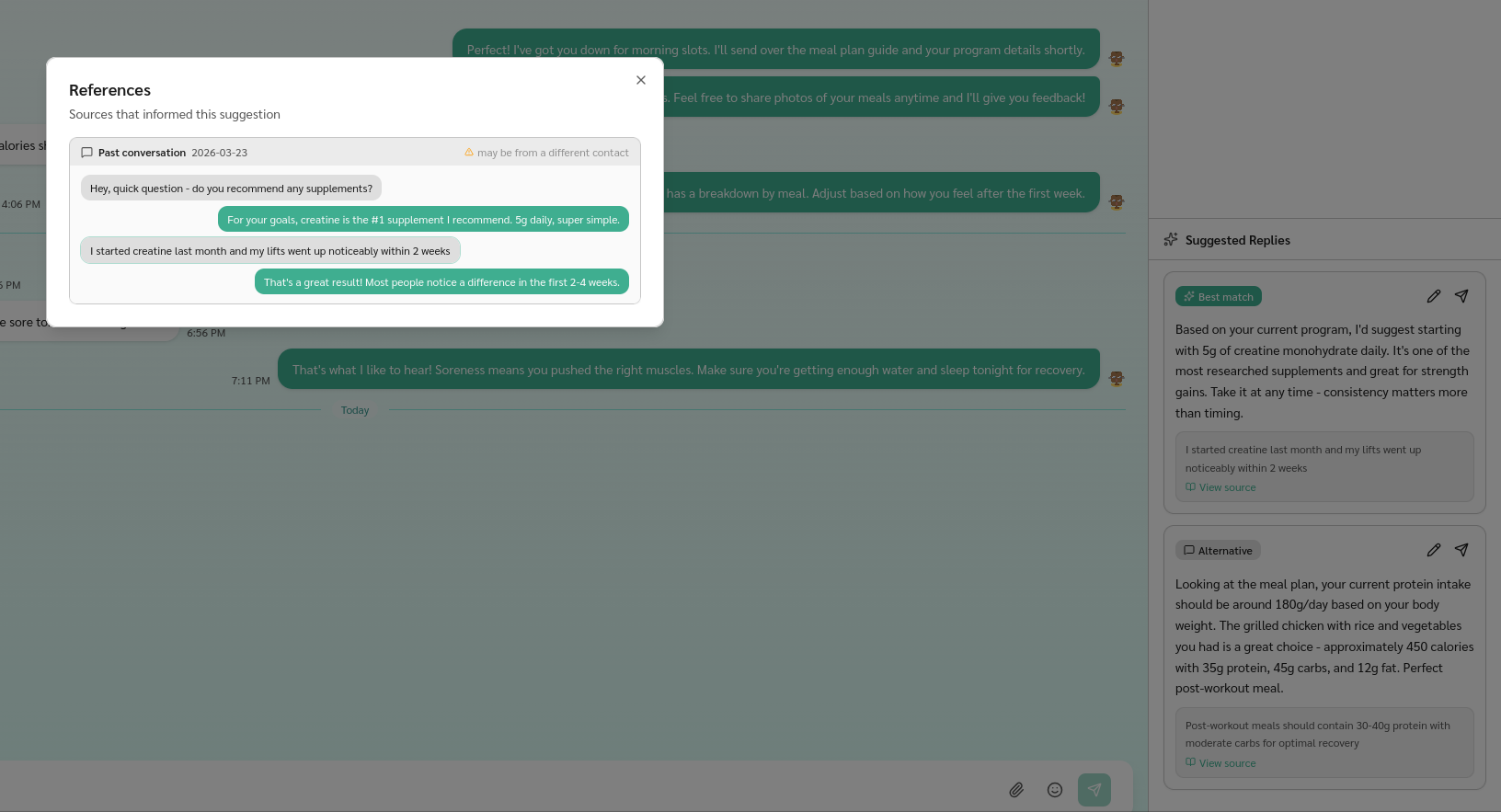
- AI-suggested replies from past conversations. Most DMs are variations of the same 20 questions. Surfacing the reply your team already sent to a similar question — that actually closed a sale — collapses reply composition from 90 seconds to 5.
- Auto-distribution by availability. Static round-robin breaks the second someone goes to lunch. Assigning based on who’s online and how many conversations they’re currently handling keeps the queue flat.
- Resource-aware AI for research questions. When a customer asks “does this ship to India with customs fees?” your team shouldn’t be digging through a shipping policy doc. The AI should read the policy and surface the answer alongside the suggested reply.
- Performance visibility per person. If you can’t see who’s fast, who’s slow, and when your peak hours hit, you can’t fix it. A busiest-hours heatmap alone typically uncovers 1–2 hours a day where your team is underwater and no one noticed.
A realistic 30-day plan to cut median reply time in half
- Week 1: Measure your current median reply time per channel, not just average. Most teams discover they’re 2–3x slower than they thought.
- Week 2: Consolidate channels into one inbox. Cutting tab-switching alone usually shaves 30–40% off reply time.
- Week 3: Turn on AI suggested replies trained on your past winning conversations. Measure how often suggestions are accepted as-is.
- Week 4: Add auto-distribution and review the per-manager dashboard. Reassign the worst hour of the week.
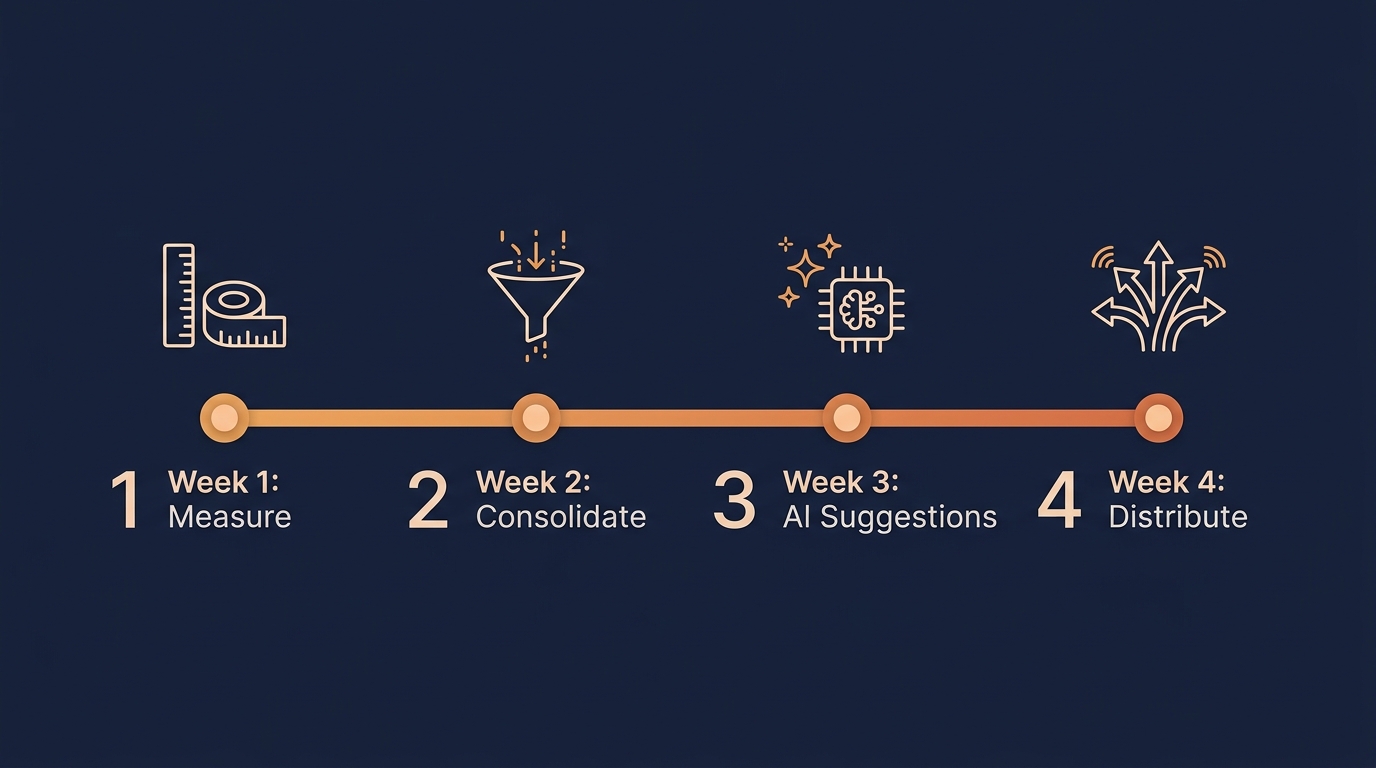
Teams that follow this plan typically move from a 45-minute median to under 10 minutes within a month, without hiring anyone. If you’re running a small team, the same playbook scales down — see our guide on DM automation for small teams.
FAQ
What is a good DM response time in 2026?
Under 15 minutes on Instagram, under 10 on WhatsApp, under 5 on LINE, under 30 on Messenger. Top-performing teams hit these numbers as medians, not best-cases.
How is DM response time measured?
Use the median — not the average — time from the customer’s first message to your team’s first meaningful reply. Auto-acknowledgements (“we’ll get back to you!”) should not count.
Does fast DM response time actually affect sales?
Yes. The intent window on impulse and mid-ticket purchases is short. A 30-minute delay roughly halves the probability of closing a warm DM lead on most platforms.
Can AI replies hurt the customer experience if they feel robotic?
They can if the AI sends replies blindly. The safer pattern is AI-suggested replies — a human reviews and sends in one click. You get speed without losing voice.
How many DMs per day can one person realistically handle?
With tab-switching and manual lookup, 60–120 thoughtful replies per day is the honest ceiling. With a unified inbox and AI suggestions, the same person can handle 500–800 without a drop in quality. That’s the math behind the headcount question.
Ready to see what a sub-5-minute median looks like on your own inbox? Start a 14-day trial or book a call.